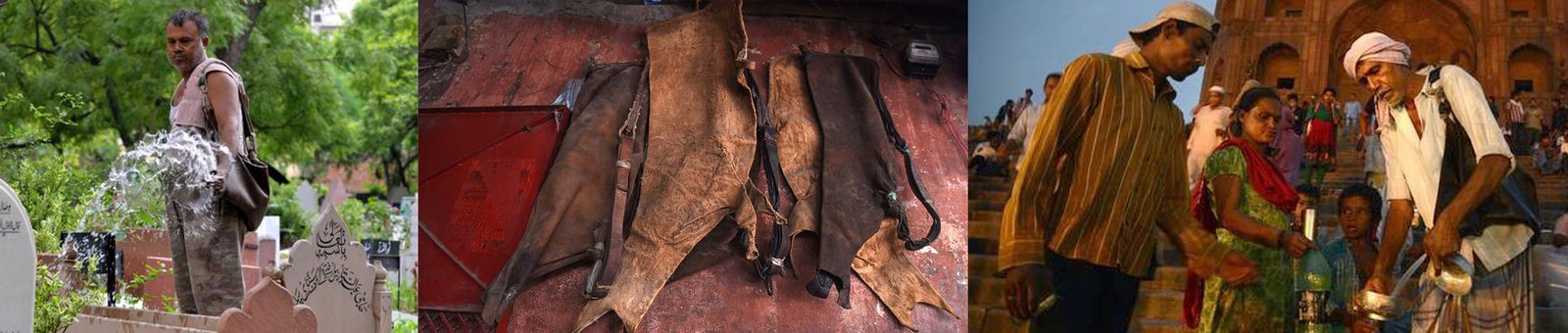

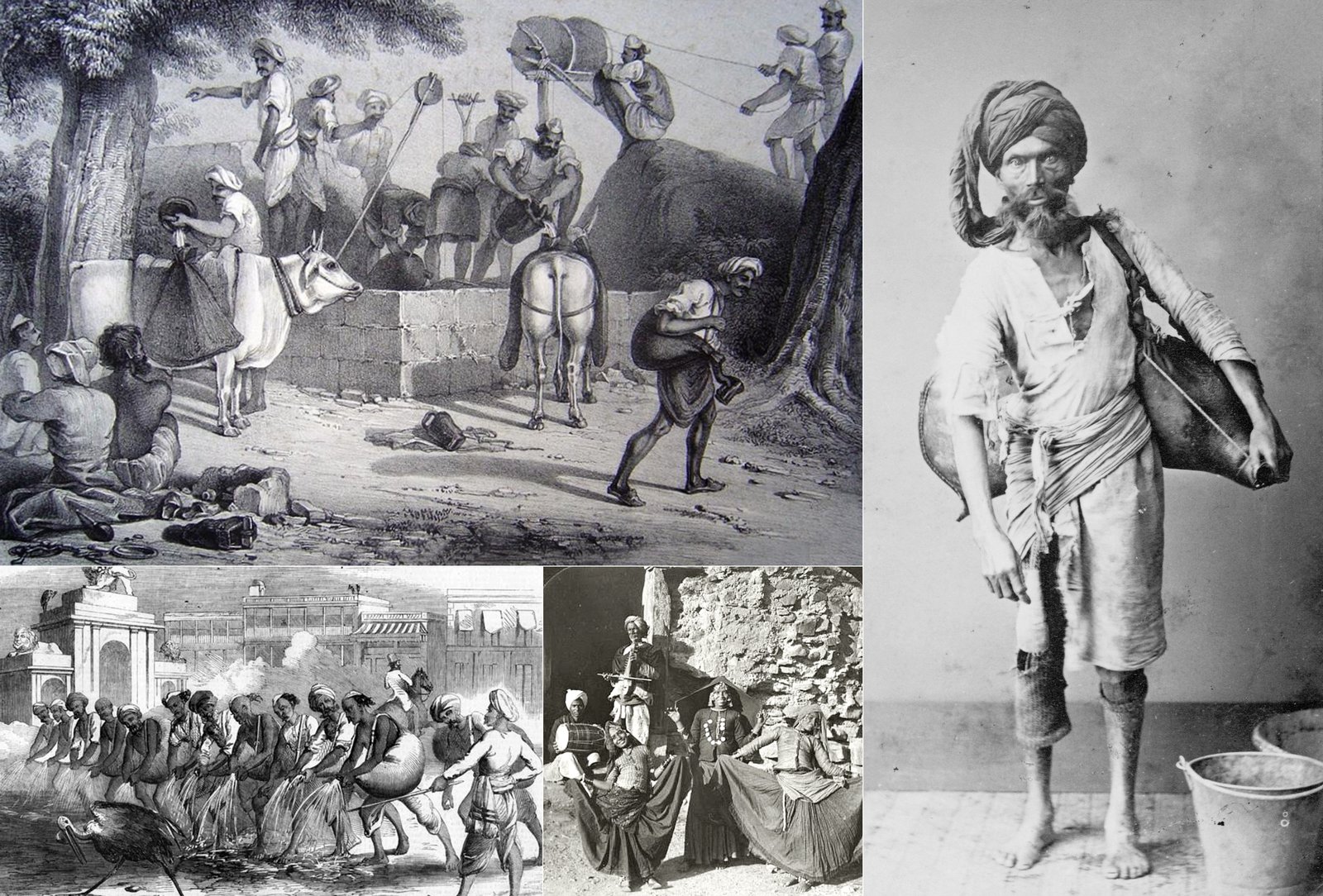
Anthropologists, Russel and Hiralal (1916) note that the word Bhisti is derived from the Persian bhisht, meaning paradise. This name was given to them because they used to bring water to thirsty soldiers. Later, Bhisti came to be known as a community that supplied water to people in skin bags. The tribe claimed that their ancestry, and name, Shaikh Abbasi, came from Hazrat Abbas Alamdar, the paternal uncle of the prophet Mohammed. According to their history, he was the first person sent to get water from a pond in a skin bag for Imam Hussain and his followers on their way to Damascus.
The Bhisti speak Urdu and use the Persian-Arabic script. They are conversant with the languages, dialects and scripts of the many regions they live in. They are known as Shaikh Abbasi or Saqqa in Uttar and Himachal Pradesh, while in Gujarat they are referred to as Parkhali. In Madhya Pradesh, they are called Sakka, Maski or Pakhali, and in Maharashtra, Pakhali. Whereas, in Delhi, they are known as Shaikh Abbasi, Sakka and Mashki/Maski.
A few from the Bhisti community still carry on the tradition, however today, drinking water is readily accessible to everyone, be it vegetable growers, construction workers or the people at festivals, celebrations or religious gatherings.
With the decreasing number of Bhistis today, Eastbound strives to keep this unique tribe alive through its stories. Come with us and meet some of its community members to get acquainted with this unique tribe.